


Last Updated: November 12, 2026
Quick Summary
Forever Mine Diamonds is a strong blue nile alternative for couples who want both lab-grown and natural diamonds in one place. It offers certified stones, ethically sourced jewelry, a lifetime warranty and an appraisal certificate with each piece.
- Forever Mine Diamonds offers both lab-grown and natural diamonds, so couples can compare on equal terms.
- Its listed 5.01ct Round Lab Grown Diamond is priced at $1,736.00 and is IGI certified.
- Each piece includes a lifetime warranty and an appraisal certificate.
- Agree on a total budget first, then split which partner decides the stone, the setting and the band.
- Compare quotes only after matching the four Cs, the certificate lab and the delivered total.
Table of Contents
- Why Couples Look Beyond Blue Nile
- How Couples Should Split the Decision and the Budget
- Lab-Grown vs Natural Diamonds for Engagement Rings
- How to Choose an Ethically Sourced Diamond
- Engagement Ring Price Comparison Guide
- Matching Wedding Bands and After-Purchase Service
- Booking Your First Consultation With Forever Mine Diamonds
- Frequently Asked Questions
Why Couples Look Beyond Blue Nile
Many shoppers search for a Blue Nile alternative because they want more than one option for the stone, the setting and the price. Some partners want a natural diamond for its traceability, while others prefer a lab-grown stone for its lower upfront cost. A retailer that offers both lets couples compare on equal terms instead of choosing a camp before they start.
Couples also tend to look for a blue nile alternative when they want clearer answers about warranty coverage, return windows and after-purchase service. Read each retailer's policy closely, because terms on warranties and returns differ more than most shoppers expect.
How Couples Should Split the Decision and the Budget
A workable approach is to agree on a total budget first, then decide which partner leads on each part of the purchase. One person may care most about the center stone, while the other focuses on the metal or the band. Splitting the choices this way keeps the process from stalling.
Set the budget in writing before browsing. A common mistake is letting the first attractive stone set the ceiling. Once you know the number, compare options that fit inside it, and leave a small reserve for resizing or a matching band.
Lab-Grown vs Natural Diamonds for Engagement Rings
Lab-grown diamonds are chemically and optically the same as mined stones (Simulants, Moissanite and Lab-Grown Diamonds). The practical difference is usually price and sourcing story, not appearance. Natural stones carry the traceability and resale considerations many buyers still value.
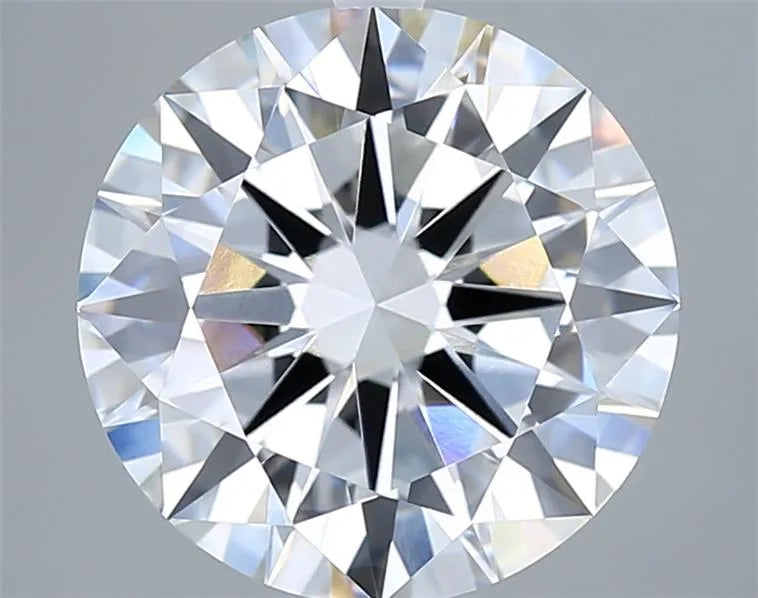
Forever Mine Diamonds offers lab-grown options such as the 5.01ct Round Lab Grown Diamond (Colour E, Clarity VVS1, Cut EX, IGI Certified), priced at $1,736.00, which you can review on the product page.
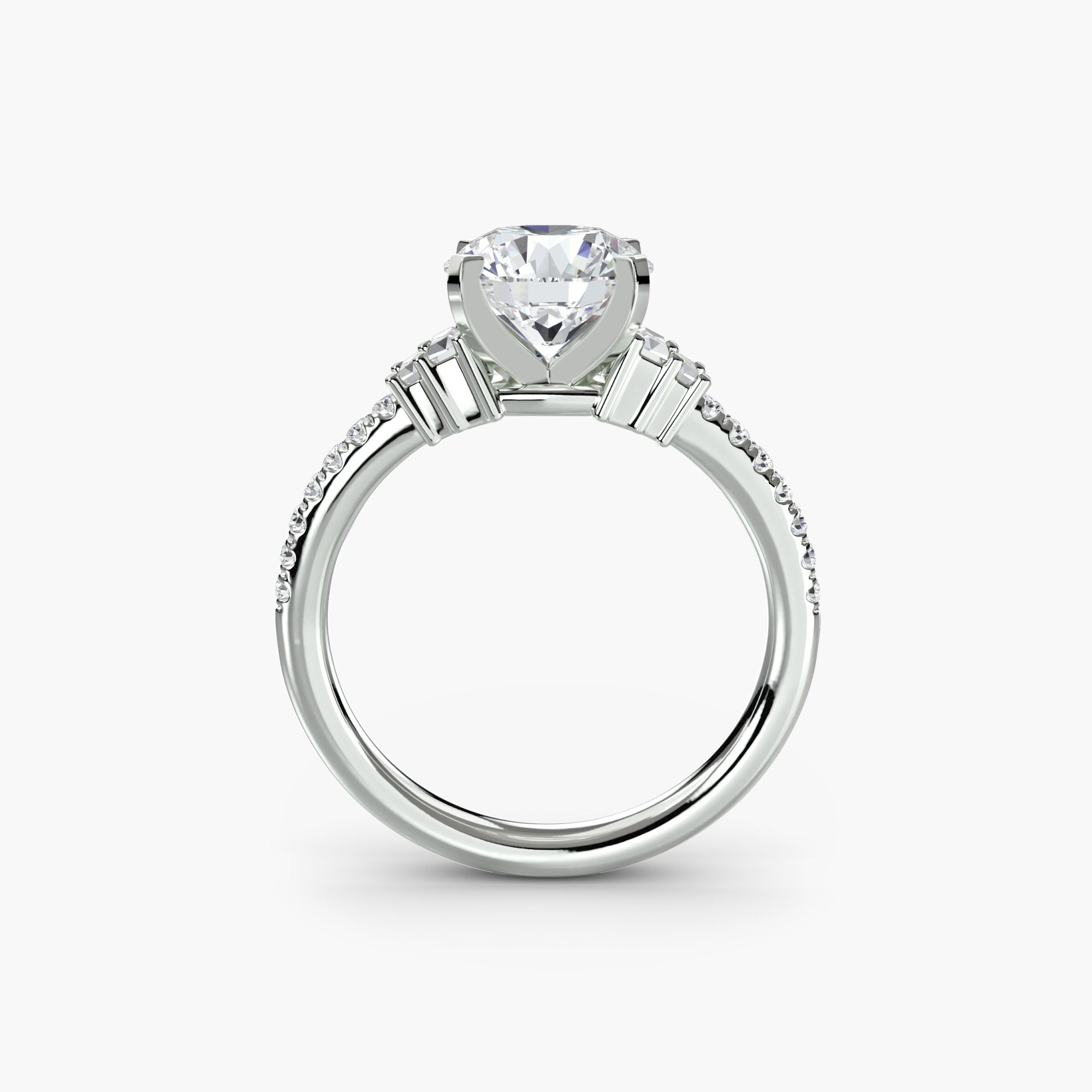
Natural stones remain the choice for buyers who prioritize a mined stone. Forever Mine Diamonds also carries certified natural options, and you can explore a GIA-certified natural princess cut for comparison.
How to Choose an Ethically Sourced Diamond
Ethical sourcing is best judged by documentation, not marketing language. Look for a grading report from a recognized laboratory and ask the retailer how each stone's origin is traced. Forever Mine Diamonds states that its jewelry is ethically sourced and conflict-free, and that it uses recycled precious metals.
Ask for the certificate for every stone. The same question applies to lab-grown stones, where the certificate confirms grading rather than origin.
Engagement Ring Price Comparison Guide
Most retailer comparisons fail because they compare different stones. A 1.50ct round brilliant in color H, clarity VS2, excellent cut, with a GIA report is not the same product as a 1.50ct round brilliant in color J, clarity SI1, very good cut, with an IGI report, even though both listings may say "1.50ct round." To compare value honestly, lock the four Cs and the certificate issuer before you look at any price.

Build a like-for-like comparison sheet
Use the same columns for every retailer you evaluate:
- Stone: carat, shape, color, clarity, cut, polish, symmetry, fluorescence, certificate lab and report number
- Setting: metal type and purity (14K vs 18K, platinum vs white gold), setting style, side-stone carat weight and grade
- Ring price: the total for the finished piece, not the stone alone
- Taxes and shipping: whether they are included or added at checkout
- Return window and restocking fee: number of days and any deductions
- Warranty and service: what is covered, for how long, and who pays shipping for repairs
- Resizing: number of free resizes and the cost per resize after that
A common pattern is that two retailers list similar-looking rings at very different totals because one price excludes the setting, tax, or shipping. Normalize every quote to a delivered, finished-ring total before you judge value.
Use the retailer's own listings as a baseline
Forever Mine Diamonds publishes starting prices you can use as a reference point. The Eternal Dawn solitaire setting is listed at $1,320.00, and a 5.02ct Princess Lab Grown Diamond is listed at $1,195.00. Treat these as anchors: when you request a quote from another retailer, ask for the same shape, carat range, color, clarity, cut, and certificate type so the comparison is apples to apples.
For natural stones, ask for the GIA report number on every stone you are quoted. For lab-grown stones, ask whether the report comes from IGI or GIA and confirm the grading scales match. A lower price on a stone with a softer color or clarity grade is not a saving, it is a different product.
Account for the costs after checkout
Price comparison does not stop at the ring. Add these to your sheet:
- Sales tax: varies by state and by whether the retailer has a physical presence in your state
- Shipping and insurance: insured shipping is often free, but confirm it
- Resizing: a first resize is commonly free within a window (often 30-60 days); subsequent resizes can run $50-$150 depending on metal and whether the band is plain or set with stones
- Appraisal: needed for insurance riders; some retailers include one, others charge $75-$150
- Maintenance: rhodium plating on white gold every 12-24 months, prong tightening, and stone checks
Watch out: a "best price guarantee" only works if you can document the competing quote with identical specifications, certificate lab, and delivered total, keep every quote in writing, including the report number, so the guarantee is checkable.
When a lower price is actually a different product
Three common mismatches inflate apparent savings:
- Certificate lab. GIA and IGI both grade accurately, but the market prices GIA-graded natural stones higher. Compare within the same lab.
- Cut grade. An excellent cut outranks a very good cut in light performance; a lower price on a very good cut is not a like-for-like saving.
- Setting metal. 14K white gold costs less than 18K or platinum. Confirm the metal before comparing totals.
Run every quote through the same sheet, and the value question answers itself.
Matching Wedding Bands and After-Purchase Service
Most buying guides treat the engagement ring as the finish line. For couples, it is the midpoint. The wedding band is a second purchase that has to coordinate with the first, physically, stylistically, and financially, and the service terms you accept at checkout determine what the rings cost you over the next decade.
Coordinate the band with the engagement ring
Start with the profile of the engagement ring. A low-set or bezel-set center stone often will not sit flush against a straight band, which pushes couples toward a curved or contoured band. A high-set solitaire leaves room for a straight band or a stacked look. Bring the engagement ring, or its exact measurements, to the band decision.
Match on three axes:
- Metal: same metal and purity (14K white gold with 14K white gold, platinum with platinum). Mixing metals is a style choice, but it changes how the two rings wear against each other.
- Width: a band within about 0.5 mm of the engagement ring's band width reads as a set; a much wider or narrower band reads as a deliberate contrast.
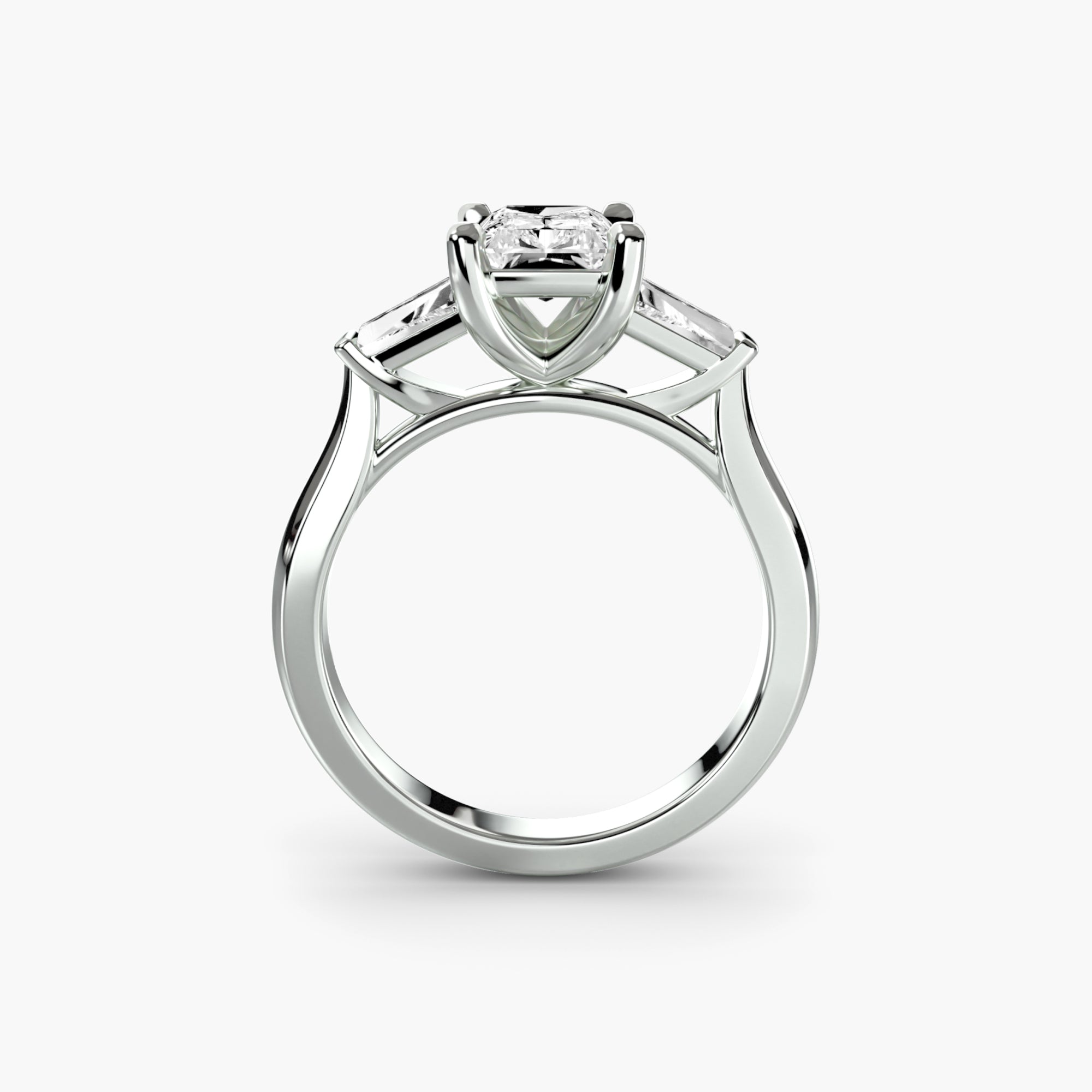
- Stone pattern: a plain band next to a pave engagement ring, or a matching pave band, are the two most common pairings. The Three Stone Ring with Baguette Side Stones shows how side stones can echo a band's pattern.
Plan for two different hands and two different priorities
The couple angle matters here. One partner may want a band that matches the engagement ring exactly; the other may want a band that stands alone for daily wear. A common pattern is to buy a matched set for the partner who wears the engagement ring and a complementary but independent band for the other partner, same metal, coordinated width, different stone treatment.
Sizing also differs by hand and by lifestyle. Ask about sizing across the full range before ordering, and confirm whether the retailer resizes bands with stones set in them, sizing a full-eternity band is often impossible without remaking it. If either partner works with their hands, discuss a lower-profile band or a bezel setting.
Budget the band before you buy the ring
Set the band budget at the same time as the engagement ring budget. A matching band with the same metal and stone pattern commonly runs a meaningful fraction of the engagement ring setting cost, and buying both from one retailer can simplify matching and service. You can price a band against the Eternal Dawn solitaire setting at $1,320.00 before you commit.
Understand the after-purchase costs
Service terms differ more than most couples expect. Put these in writing before checkout:
- Warranty: what it covers (manufacturing defects vs. wear and tear), how long it lasts, and whether it is voided by a third-party jeweler's work
- Free resizing: how many, within what window, and whether stones-set bands are excluded
- Rhodium plating: white gold needs re-plating every 12-24 months to restore color; ask whether it is included
- Prong and stone checks: recommended every 6-12 months; ask whether the retailer performs them free
- Appraisal: needed for an insurance rider; confirm whether one is included or costs extra
- Repairs: who pays shipping both ways, and typical turnaround
Forever Mine Diamonds includes a lifetime warranty and an appraisal certificate with each piece, and offers pre-owned options through its previously purchased rings collection.
Watch out: a lifetime warranty that requires annual inspections at the retailer can be voided silently if you skip a year, calendar the inspection date and keep the paperwork.
Insure both rings together
Once you have both appraisals, add both rings to a homeowner's or renter's policy rider or a standalone jewelry policy. Compare the deductible against the replacement value, and store the appraisals, certificates, and photos together. Couples who insure both rings on one policy often get a lower combined premium than two separate policies.
Booking Your First Consultation With Forever Mine Diamonds
Start by listing your budget, your preferred stone type and your non-negotiables. Then compare two or three options in the same price band before deciding. Every purchase includes a Certificate of Authenticity and an Appraisal Certificate.
When you are ready, shop the collection and bring your list. A clear plan makes the decision easier for both partners.
Frequently Asked Questions
Who competes with Blue Nile?
Blue Nile competes with other online diamond retailers and with independent jewelers. Couples comparing options typically look at lab-grown specialists, retailers that offer a best-price guarantee, and brands that publish their grading certificates with every stone. When you compare, check the diamond's grading report, the warranty terms and the return policy alongside the headline price, since those differences often matter more than the sticker cost. Forever Mine Diamonds offers IGI and GIA certified stones, a best-price guarantee and a lifetime warranty on its pieces.
Are lab-grown diamonds a good alternative to natural diamonds?
Lab-grown diamonds are chemically and optically the same as natural diamonds, and they are typically priced lower for the same carat weight, cut, color and clarity. Many couples choose them for budget reasons or because of sourcing concerns. Natural diamonds may hold a different kind of meaning for some partners, so it helps to discuss that before shopping. Forever Mine Diamonds carries lab-grown stones such as a 2.93ct Round Lab Grown Diamond (Colour E, Clarity VVS1, Cut ID, IGI Certified) listed at $926.00.
How can I ensure my diamond is ethically sourced?
Ask the retailer where the diamond was produced and whether it comes with a grading report from an independent lab such as IGI or GIA. Lab-grown diamonds avoid many of the mining concerns associated with natural stones, but you should still confirm the supplier's documentation. Forever Mine Diamonds sources ethically and conflict-free stones, makes its jewelry in the USA and uses recycled precious metals, and each piece includes a Certificate of Authenticity and Appraisal Certificate.

